
Ilse Blanquet
Manuel
Acapulco, 2014
In September of 2013, hurricane Manuel hit the Pacific Coast of Mexico affecting several places from Oaxaca, Michoacan, Chiapas and Guerrero. The tropical cyclone produced floods and destruction in several municipalities across the West Coast, and the aftermath of this natural disaster caused over 30,000 people to lose their houses and belongings. Afterwards, the Mexican government faced serious condemnations for their mismanagement of control of a natural disaster. The delayed response and the lack of assistance were evident and devastating, especially in rural areas.
The heavy flooding and deluges killed many people, others remained trapped under the mud and, many others survived but lost their homes and their belongings. Rescuers took long to arrive at the collapsed localities, and when help arrived; highways were cut off, homes were buried due to the mudslides and streets looked like rivers. During the following days, remaining residents struggled to find shelter, food and a place to be safe with their surviving families. The after-effects caused extensive destruction across Guerrero but mostly in the remote areas. Despite the government actions and the Aid Plan for Disasters supported by Mexican armed forces to help local citizens; aid and assistance was poor, deficient and uneven.
Almost five months after the natural disaster, I travelled to Acapulco to document the aftereffects of this natural disaster. On my trip, I visited some municipalities in Acapulco such as Barra Vieja, Coyuca and Parotillas. Across the journey, I spoke with some residents who survived the catastrophe and who were striving to survive despite insufficient help from authorities. The following testimonies are just a brief sight of my conversation with three out of the 17 people I spoke with during the trip.
Maribel is 12 years old and she lives in Barra Vieja with her father Jesús, her sister Daniela, her uncle José, her aunt Maricarme and her cousin, Valeria. Their home collapsed due to the flooding so they were forced to evacuate the place mediately. They were unable to find asylum as the provisional shelters were given by the government, were already full and far; hence they temporarily settled on an abandoned school nearby from their wrecked home:
"This was supposed to be an elementary school. It was under construction but with all the floods and the rain, is all destroyed now. My family and I live here because we don't have a home anymore. Our house inundated to the point we were unable to live there. After the big storm passed, we took some of the leftovers and belongings we could rescue like some clothes and shoes. It's very sad for me because my mother passed away two years ago and I miss her during these times. I feel like most people had a hard time. My dad goes to the sea to fish so we can have something to eat and my cousin and I walk for hours to the shelters to bring some more food. We have spoken to authorities about our situation but my dad only receives the same answer: 'We will take care of your issue'. This construction and the empty classrooms make me miss my friends from my school".
Meantime, in the municipality of Coyuca, Rosa María used to live with her mother and her 5 years old son. She used to sell beauty products and some second-hand clothes in the market nearby her home. Because of the storm, she took longer to come back to her house where her mother, Doña Rosita was taking care of her grandson. When Rosa María arrived, she found her home inundated but Doña Rosa was up in their bed with her grand-son trying to keep him safe from the flooding. Shortly after, they were alerted to evacuate and to clear out as the river was overflowed and the flood was moving downstream. Rosa and her mother, who was unable to walk properly due to an operation on her hips; left their house and walked through the storm fooling the rest of the neighbours. Nevertheless, Doña Rosa was carried by the flood due to the strength of the overflow as she slipped on the road. Rosa María couldn't help her as she was carrying her son in her arms and also, she had a heavy backpack with important documents.
"It was the saddest moment of my life and I will never forget how my mother died in front of my eyes. I was unable to help her because I had my little boy wrapped around my body. It was very difficult to walk, it was raining and the water level was up to my knees, it was very strong. My mother was a good woman and she was looking after my boy while I went out for work. When I came back to my house everything was wet and covered in mud. It has been very difficult for me to survive without my mom and with my son who got sick after the flooding. I didn't have a job because the market where I used to sell my products, also collapsed. People don't have money as well so I have to receive some food rations and drinkable water because the water supply is limited. Neighbours and all of our community are getting together to help each other with food and basic stuff".
Next to the river Papagayo, Don Mauricio lives with his wife and his two sons; Paco who is 28, and Javier who turned 23 in January. Don Julio works as a fisherman and he and his two boys, sell freshwater fines in the market and also, to traders who look for seafood for restaurants. As he recalls, the intensity of the storms left them incapable to work for days and as the days went by, they got worried about the upcoming times due to the hurricane:
"We watched the news and also we alerted by the authorities that all activities around the sea and the river were suspended. The weather got worse every day and I was concerned about what would happen next as the hurricane upgraded a category really fast. One day, it looked as it was heavily raining but some hours after, the communication lines were down and all the roadways were flooded. My house resisted the water flow, we don't have critical damage as other people because I built this house on my own many years ago. After tropical storms and hurricanes, many of the sea animals are displaced, some other swim to other areas far away from the storm and most fishes can't survive. We have some savings and we are receiving some help from the government but is never enough. I have friends from other areas who are dying because right now there's a food and drinking water shortage. I have lived here all my life and for 57 years I think this is probably the worse I have seen Acapulco. Tourism will decrease and there will be no jobs, we will have to wait until we can get back to normal but in the meantime, we will do our best to keep working through adversity".

Maribel celebrated her twelve birthday just one week before the heavy floodings. She said despite losing her home, she is very grateful her father is still alive. This happening has changed her life drastically and she misses her classmates and going to school. Her favorite subject was History, actually she wants to become an elementary school teacher as she loves kids and speaking in public. She is very hopeful to come back to her school and to be able to buy a house in the beach for her and her father.
.jpg)

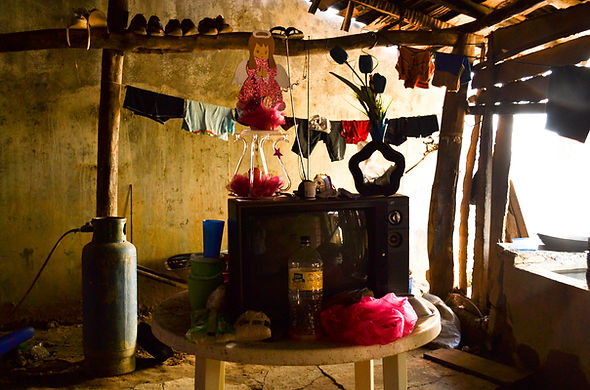
Don Jesús, Maribel's father, showed me this picture which was taken two days after the storm stopped. He took copies of this snap to different authorities to receive help with all the damages in his house. By the time we spoke, Don Chui -as he was called by his family-, was certain he would have to begin again without any help.

Maribel and her cousin Valeria standing outside of the only room where the whole family sleeps. Both became closer after the hurricane wrecked their homes. Maribel described Vale as "quiet but very supportive with her".
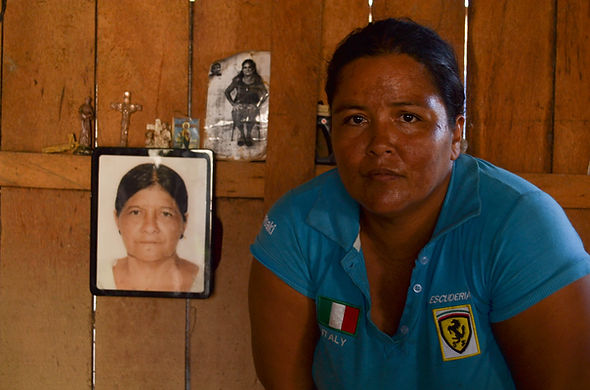
Rosa María asked me if I could take a picture of her standing beside the last portrait of her mother.

Post-hurricane consequences can include health risks. After Rosa Maria and her son Ramiro were able to come back to their home; the little boy presented severe symptoms of poisoning caused by a bacteria.
.jpg)
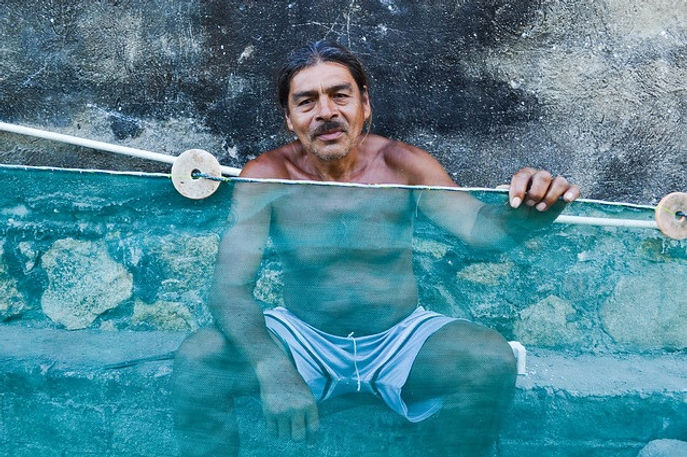
Fishing nets can be very expensive but Don Mauricio learned from his father how to hand-sew them. After the natural disaster, he helped many fishermen to replace and repair their nets that were lost during the storms.


